Of all the questions that reach our team in Fort Worth, one comes up more than almost any other: should I pay for a Boeing 737 type rating before an airline hires me?
You might expect a school that teaches 737 type ratings to answer with an enthusiastic yes. We won't, because the honest answer depends on where you are in your career. For some pilots, an early type rating is the single strongest move they can make. For others, it's an expensive way to buy something an airline would have handed them for free.
This article walks through both sides, so you can figure out which pilot you are.
What a Type Rating Actually Is
Under FAA rules, you need a type rating added to your pilot certificate before you can act as pilot in command of a large aircraft — generally anything over 12,500 pounds — or any turbojet-powered airplane. The Boeing 737 qualifies on both counts, so every captain flying one carries the B-737 rating on their certificate.
Earning it is not a formality. A type rating course covers the aircraft's systems in depth — hydraulics, electrics, pressurization, automation — along with the procedures for operating it, normal and abnormal. It ends with a practical test flown to a demanding standard, usually in a full-motion simulator rather than the airplane itself.
A type rating is also different from the ATP CTP — the FAA-required Airline Transport Pilot Certification Training Program under 14 CFR 61.156 that you must complete before taking the ATP knowledge test. We teach both, and plenty of pilots pair them. But they answer different questions: the CTP is a prerequisite for the ATP certificate, while the type rating qualifies you on one specific aircraft.
Who Benefits Most From Getting Typed Early
Three groups, in our experience, get real and measurable value from a self-funded 737 type rating.
Pilots headed to international carriers
Hiring outside the United States often works differently. Many international airlines advertise directly for type-rated first officers and expect candidates to arrive with the rating — and often recent simulator time — already in hand. If the operators you're targeting fly the 737, showing up typed can be the difference between an interview and a form rejection.
One practical note if you're not a U.S. citizen: federal rules require TSA clearance before any simulator training begins, and processing typically takes one to four weeks. We've laid out the full TSA clearance process, and our team walks international students through it routinely.
Pilots targeting specific 737 operators
The 737 is one of the most widely flown airliners in the world, which means charter, cargo, and supplemental operators of many sizes fly it. Some list a current type rating as a requirement; others treat it as a strong differentiator when two resumes are otherwise similar. Read the actual job postings for the operators you want to fly for — if they keep mentioning the type, that tells you something.
Military aviators making the transition
If you're leaving the service with thousands of turbine hours, you have the experience airlines want but not always the paperwork civilian recruiters can read at a glance. An ATP certificate paired with a 737 type rating translates a military logbook into airline language — and proves you can perform in a transport-category flight deck to civilian standards.
Who Should Probably Wait
Here's the part some schools skip.
If you're a U.S. civilian pilot on the standard path — build time, fly for a regional, upgrade, apply to the majors — a self-funded type rating is usually not the best use of your money. U.S. airlines typically pay for your type rating as part of new-hire training, on the aircraft they assign you. Spend your savings on a 737 type and then get assigned a different fleet, and that investment did very little for you.
A type rating also isn't a shortcut around experience. It won't substitute for the flight hours the ATP certificate demands, and no recruiter will treat it as a replacement for time in the air. If you're early in your hour-building, your money almost certainly works harder buying multi-engine time or instructing toward your minimums.
When pilots in this position call us, we tell them exactly that. We would rather you come to us at the right moment than at the profitable one.
What the Course Demands — and How We Run It
Wherever you train, expect a firehose. The ground portion goes deep on transport-category systems, turbine operations, high-altitude aerodynamics, adverse weather, and stall prevention and upset recovery. Then the simulator sessions layer on procedures, flows, callouts, and crew coordination until they hold up under pressure. Plan to study every evening; the pilots who struggle are the ones who treat it like a vacation with sim time attached.

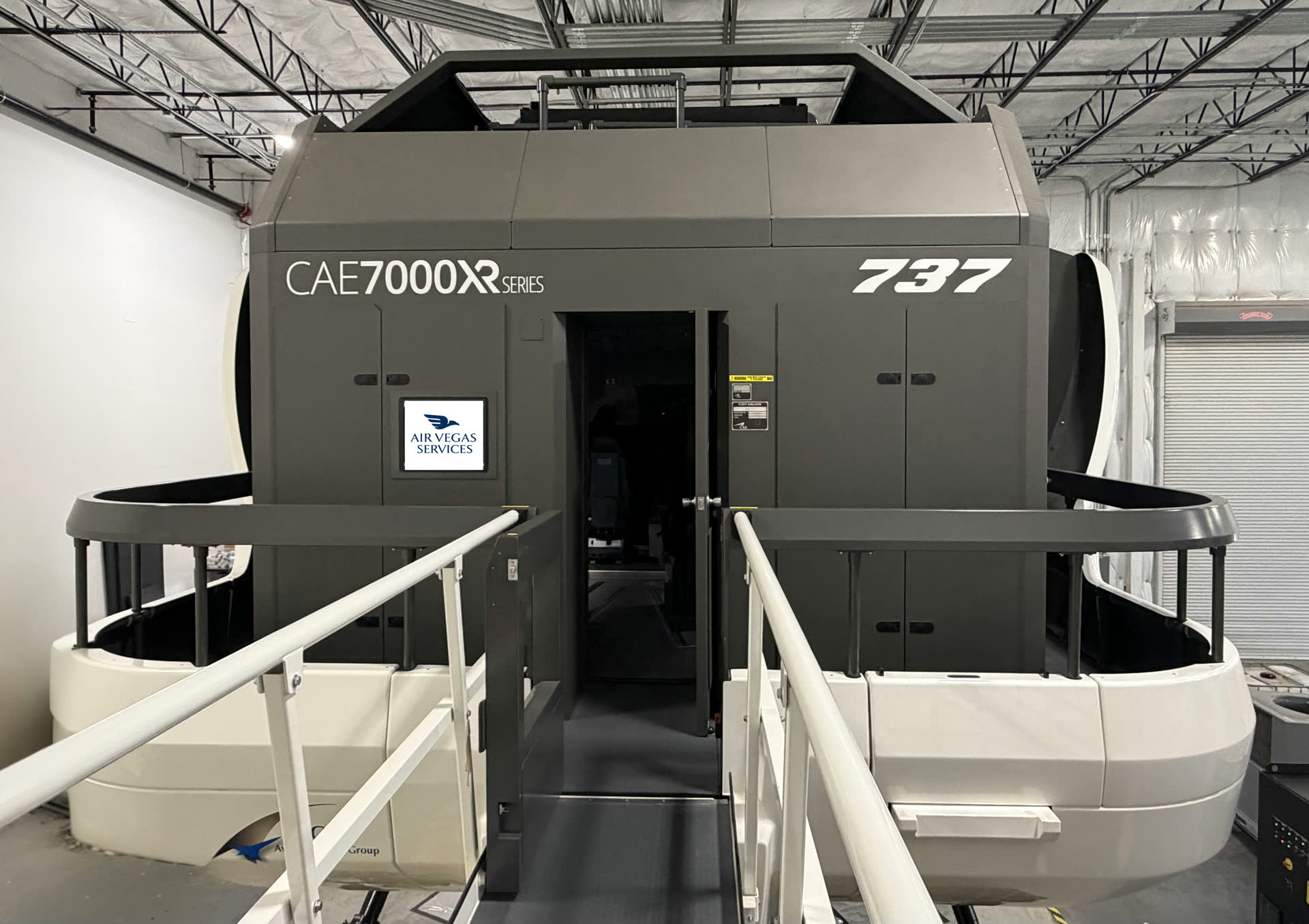
At Air Vegas Services, that training happens in a full-motion Boeing 737 simulator on-site at our facility on Diplomacy Road in Fort Worth, minutes from DFW — no traveling to a third-party sim center mid-course. Every session is framed by airline-style briefings before and after, focused on procedures, decision-making, and operational discipline, because that's the rhythm you'll live in at a carrier.
Our instructors are experienced airline pilots with decades of operational experience, and as a family-owned school we keep the experience personal: you work closely with your instructors from enrollment through checkride, not as one seat in a hundred-person class. For students traveling in, we arrange partner-hotel discounts and shuttle information so logistics never compete with studying.
Questions to Ask Any Provider
Whether you train with us or with anyone else, ask these before you send a deposit:
- Is the simulator full-motion and on-site? Some programs quote a price, then send you elsewhere for sim time.
- Who teaches? Ask whether the instructors have real airline experience, not just simulator hours.
- What exactly does the price include? Ground school, sim sessions, examiner fees — get the boundaries in writing.
- How are sessions briefed? Airline-style pre- and post-session briefings are where much of the learning actually happens.
- What support exists for traveling students? Hotels, shuttles, and a schedule shared before you book flights.
- If you're not a U.S. citizen: will the school actively guide you through TSA clearance, or leave you to figure it out alone?
A provider worth your money will answer all six without flinching.
The right answer to "is it worth it?" is personal. It depends on your citizenship, your hours, the operators you're targeting, and your timeline — which makes it a conversation, not a sales pitch.
If you want an honest read on whether a 737 type rating makes sense for you right now, reach out to our team at (817) 747-6577 or info@airvegasservices.com. If the answer is "not yet," we'll tell you that too — along with what to do first.