One of the more common questions we hear from military aviators is some version of: “how much of what I already know actually carries over?” The honest answer: more than you might think — and less than you might hope, depending on where you look.
The core of what makes you a good pilot transfers almost completely. The discipline, the instrument scan, the checklist culture, the habit of briefing a flight before you fly it — airline operations are built on exactly those foundations. What is genuinely new is mostly the wrapper around the flying: FAA certificates and paperwork, transport-category aircraft, and the rhythm of scheduled airline operations.
This post walks through both sides candidly, because the transition goes fastest when you know precisely which gaps you are closing — and which ones you are not.
What Transfers: More Than Most Applicants Bring
Procedural discipline is the big one. Military flying drills a respect for standard procedures that many civilian applicants spend years developing. Airlines call it SOP compliance — flying the aircraft the way the operator's manuals say to fly it, every time — and it is the trait evaluators notice first.
Briefing culture maps over almost one-to-one. The military habit of a thorough brief before the flight and an unvarnished debrief after it is exactly how professional airline training works. Our own program is built around pre- and post-session briefings focused on procedures and decision-making, and military students tend to feel at home there on day one.
Crew coordination transfers too, with one caveat. If you flew multi-crew aircraft — tankers, transports, crewed helicopters — you already speak the language of crew resource management. If you came up single-seat, you will have real work to do learning to operate as one half of a two-pilot crew. That is not a knock; it is simply a gap worth naming, and it is one a simulator is very good at closing.
And instrument flying: military instrument training is rigorous and flown in demanding conditions. Your scan will not be the problem.
What Is New: The Civilian Wrapper
The FAA paperwork
The military competence provisions of the FAA rules (14 CFR 61.73) let you convert your military qualifications into a commercial pilot certificate and instrument rating largely through paperwork and a knowledge test. From there, the target is the Airline Transport Pilot certificate — the license the airlines require.
Two military-specific notes are worth knowing. First, qualifying current and former U.S. military pilots can earn a restricted-privileges ATP (R-ATP) at 750 hours instead of the usual 1,500 — a meaningful head start. Second, before you can even take the ATP knowledge test for a multiengine airplane, the FAA requires you to complete an ATP Certification Training Program, or ATP CTP. More on that in a moment.
Transport-category aircraft
A swept-wing jet transport behaves differently from most military equipment: high-altitude aerodynamics, Mach effects, big weight swings between takeoff and landing, and an autoflight philosophy where the automation is a crew member you manage rather than a feature you toggle. Coming from helicopters or turboprops, the jump is larger; coming from fighters or heavy jets, it is smaller — but the airline way of using automation will still be new.
The airline operating rhythm
Scheduled airline flying runs on dispatch releases, minimum equipment lists, tight turn times, and standard callouts shared with a crew member you may have met an hour earlier. None of it is hard. All of it is different, and interviews and training events assume you understand it.
Where the ATP CTP Fits — and Why the Simulator Matters
The ATP CTP exists precisely to bridge this gap. Under 14 CFR 61.156, the course pairs at least 30 hours of academics — high-altitude aerodynamics, adverse weather, turbine engines, transport-category systems, automation, and crew concepts — with 10 hours in flight simulation training devices, at least six of them in a full flight simulator representing a large multiengine turbine airplane.
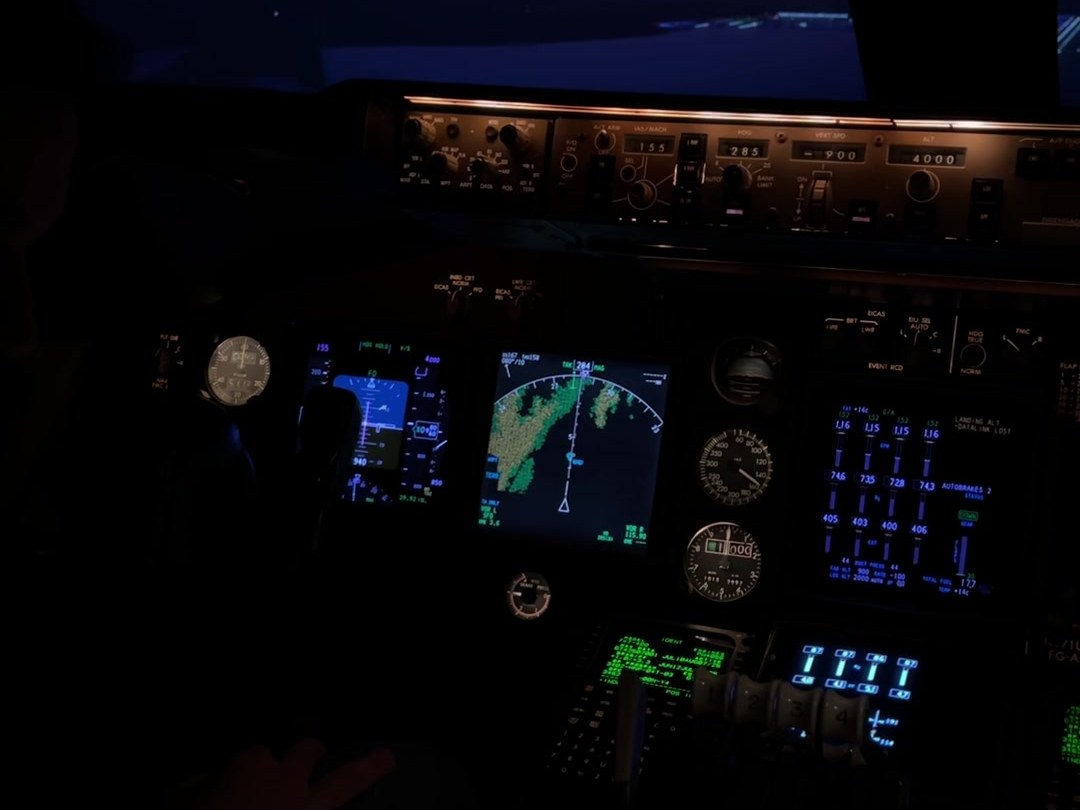
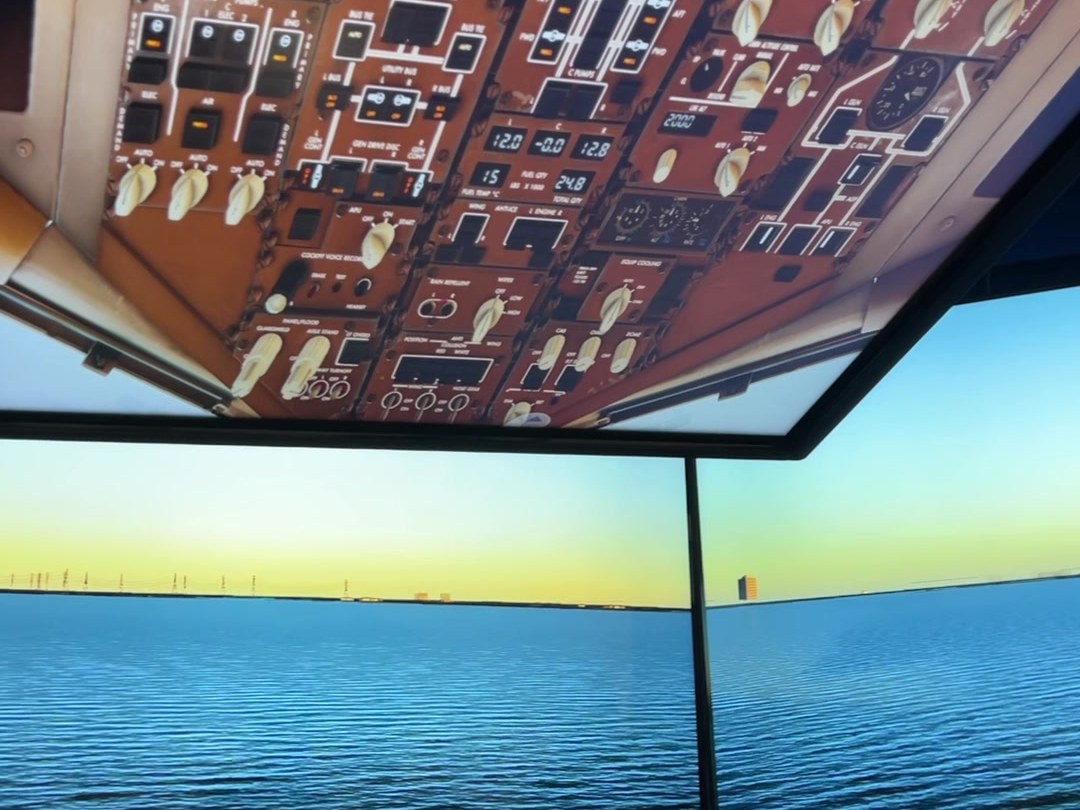
That simulator requirement is where programs differ most. At our Fort Worth training center, the full flight simulator portion runs in a full-motion Boeing 737 simulator — the same category of machine the airlines use for their own training. For a military aviator, those hours are often your first exposure to two-pilot, transport-category flying under airline-style procedures, with an instructor-controlled scenario running around you. That is the transition, compressed into a week.
Our instructors are experienced airline pilots, and for military students that matters more than it might sound. The questions you will actually have — how does this callout work on the line, what does a real dispatch delay look like — get answered by people who fly that operation.
One candid note: some airlines run the ATP CTP in-house for new hires. If you already hold a conditional job offer from a carrier that does, ask them before paying for the course yourself. If you are still building your application — or you want the ATP certificate in hand before you interview — completing it independently keeps you in control of the timeline.
Does a 737 Type Rating Speed Things Up? It Depends on the Job
Here is where we will be honest, because a type rating is a serious investment.
If your goal is a U.S. major or regional airline, they will train you and type you on their own aircraft after hire. A self-funded type rating is not required, and on its own it will rarely be the deciding line on your resume. If that is your path, the ATP CTP plus a sharp interview may be all you need from us.
Where a Boeing 737 type rating genuinely accelerates a timeline: international carriers that hire direct-entry and expect a type in hand, cargo and charter operators flying the 737, and pilots returning after a long break who need recent jet experience on paper. Our 737 type rating program pairs ground instruction with structured simulator sessions covering transport-category systems, turbine operations, and airline-oriented procedures. But if we think the ATP CTP alone serves your goal better, we will tell you so.
The Interview Sim Eval: Practice Where the Airlines Train
Many airline interviews include a simulator evaluation. Evaluators are not expecting perfection in an unfamiliar jet; they are watching your instrument scan, your aircraft control, and how you brief, communicate, and take direction as part of a crew.
Military aviators usually do well here — but often in an aircraft they have never touched. A session in a full-motion 737 with an instructor who flies the line, running the scenarios airlines actually use, turns an unknown into a rehearsal. It is one of the quieter advantages of training on airline-grade equipment.
The Fort Worth Part Is Easy
Our training center sits at 4649 Diplomacy Rd in Fort Worth, minutes from DFW International Airport — convenient whether you are flying in commercially or finishing a tour somewhere in Texas. For traveling students we arrange corporate-discounted partner hotels near the center, information on complimentary hotel shuttles, and a preliminary training schedule shared in advance so you can plan around it. U.S. citizens simply bring proof of citizenship — a passport, or a birth certificate with photo ID; non-U.S. citizens need TSA clearance first, which typically takes one to four weeks.
We are a family-owned company, and our team has worked together in aviation education for more than twelve years. If you are weighing the transition and want a straight answer about what you need — and what you do not — call us at (817) 747-6577, email info@airvegasservices.com, or reach out here. We would rather help you plan the right path than sell you the wrong course.