One of the more common questions we hear at Air Vegas Services has nothing to do with the simulator, the ground school, or the checkride. It's this: "I'm flying in from out of town — how does the week actually work?"
It's a fair question. Most of our students travel to Fort Worth for their ATP CTP course or Boeing 737 type rating, and a training week away from home has a lot of moving parts: flights, hotels, transportation, meals, study time. The good news is that almost all of that friction can be engineered out before you ever pack a bag. Here's how we help you do it.
Getting Here: Minutes from DFW
Our training center sits at 4649 Diplomacy Rd, Fort Worth, TX 76155 — a short drive from Dallas/Fort Worth International Airport. Wherever you're coming from, in the country or around the world, DFW is one of the easier airports to reach nonstop, which is exactly why we like being next door to it.
That proximity matters more than it might seem. When your inbound flight runs late, or you finish your last session and need to catch an evening departure, being minutes from the terminal — rather than an hour across a metro area — takes real stress out of the week.
Do you need a rental car? Not necessarily. Many students get by with hotel shuttles and rideshares, and if you'd rather have your own wheels for evenings around Fort Worth, rentals are available right at DFW. Either approach works — it comes down to how you like to travel.
Where You'll Stay
You don't have to research hotels blind. When you reserve your seat, we share corporate-discounted booking links with our partner hotels near the training center, along with information on complimentary hotel shuttle services to and from the simulator.
We also pass along curated local dining recommendations. That sounds like a small thing until you're on day three of an intensive course and the last thing you want to do at 8 p.m. is scroll restaurant reviews. The idea is simple: you focus on training, and we handle as much of the logistics as we can.
One honest note: a training week is not a vacation. Fort Worth has plenty worth seeing — the Stockyards, serious barbecue, a lively downtown — but the course itself is dense, and your evenings are best spent reviewing procedures and getting real sleep. If you want to explore Texas, build in a day after you finish, not during.
Plan the Week Before You Arrive
Once your enrollment is confirmed, two things happen that make the week dramatically easier.
First, we share a preliminary training schedule in advance, so you can book flights and hotels around real session times instead of guessing. Second, we send your pre-course materials so you can start studying at home. Arriving with the reading already done is the single highest-leverage thing you can do — classroom time then becomes reinforcement instead of first exposure.
That preparation matters because the ground school is genuinely substantive. Expect in-depth instruction on high-altitude aerodynamics, adverse weather, stall prevention, upset recovery, transport-category aircraft systems, and turbine operations — the academic core the FAA built into the ATP Certification Training Program under 14 CFR 61.156. It's entirely manageable, but it rewards students who show up rested and prepared rather than jet-lagged and cramming.
International Students: Start the TSA Clock Early
If you're not a U.S. citizen, one item has to move before anything else: TSA clearance. Non-U.S. citizens require Transportation Security Administration approval before any simulator training begins, and typical processing time is one to four weeks. The requirement applies broadly — initial pilot certification, instrument and multi-engine ratings, and both initial and recurrent type ratings.
The process itself is straightforward:
- Register on the TSA AFSP website and submit your personal information
- Upload your passport and visa documentation
- Provide a five-year address history
- Pay the $140 TSA application fee
- Select Air Vegas Services as your flight training provider
Budget for the associated costs, too: the $140 TSA fee, a $99 NATA fee, and roughly $100 for fingerprinting. None of it is difficult — the timeline is the part that trips people up. Because processing can take up to four weeks, start your application the moment you pick a class date; booking flights before your clearance is moving is how training weeks get postponed. The full breakdown lives on our TSA clearance page.
If you are a U.S. citizen, you skip TSA approval entirely — but you'll still need valid proof of citizenship: a U.S. passport, or a birth certificate paired with a government-issued photo ID.
Inside the Facility
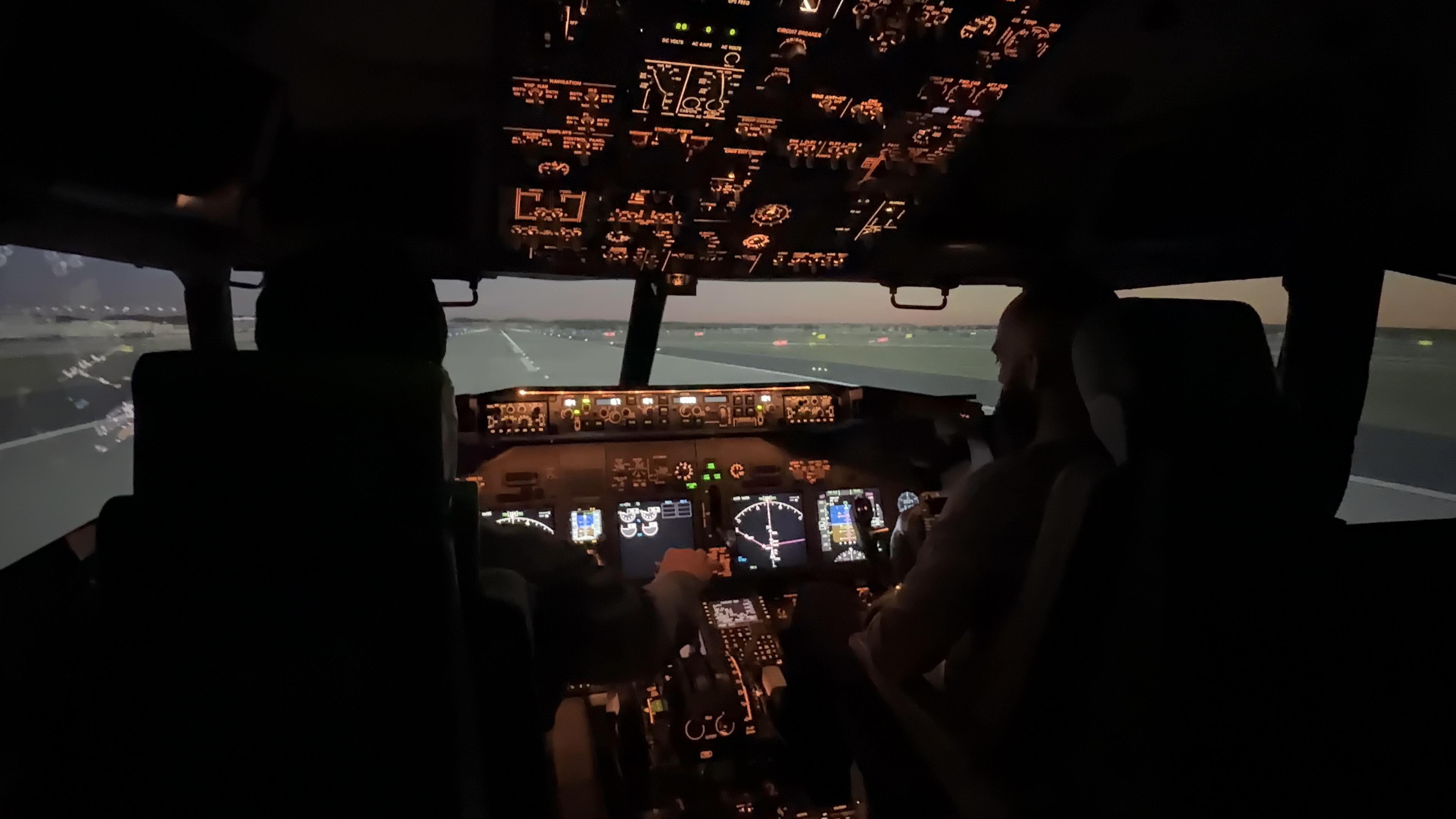
Everything happens under one roof. The full-motion Boeing 737 simulator is on-site, alongside a dedicated classroom for ground school and briefings — no shuttling between a lecture hall on one side of town and a sim center on the other.
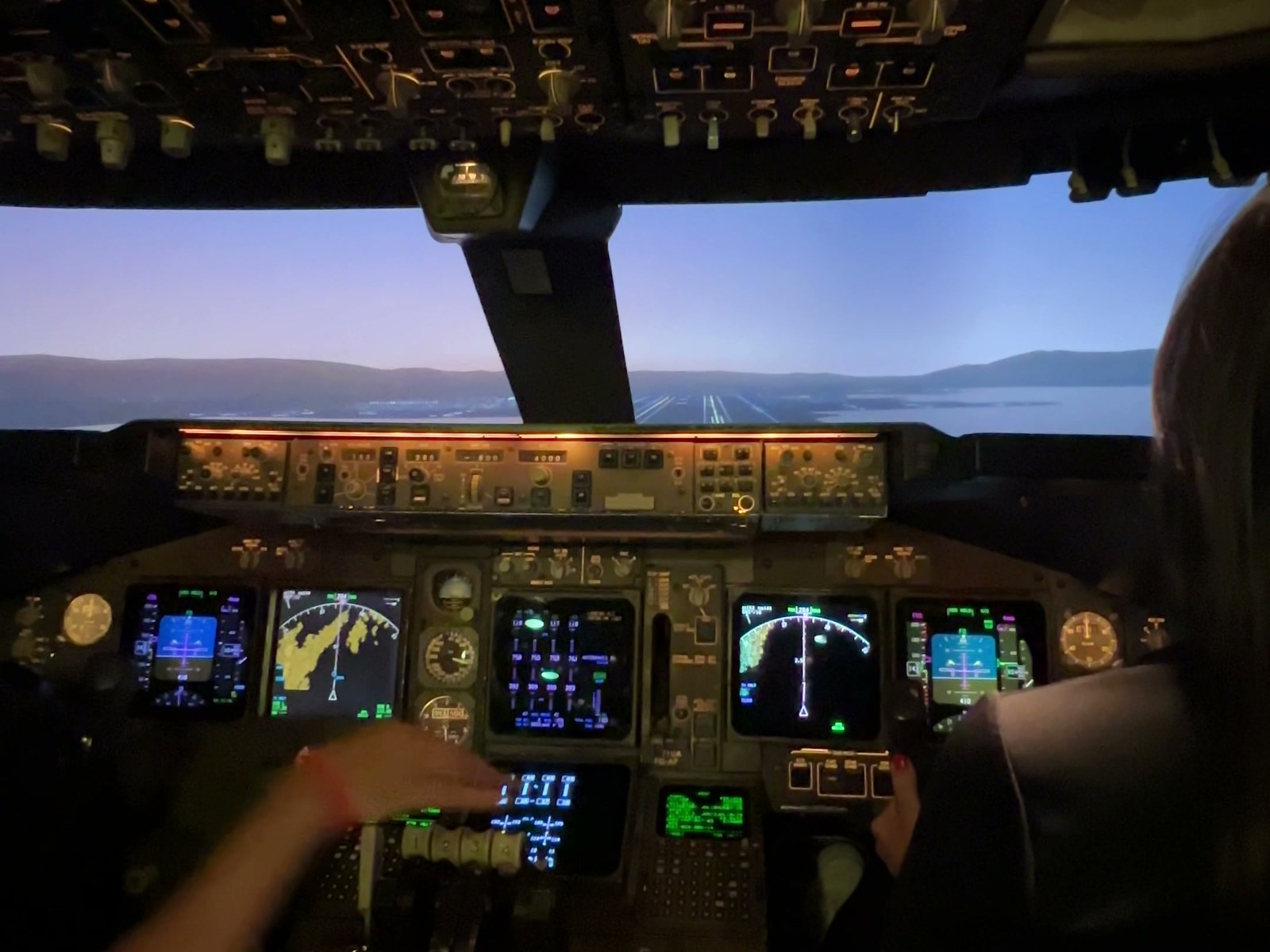
Your days follow an airline-style rhythm: a pre-session briefing to set objectives and procedures, time in the simulator flying scenarios your instructor controls from the operator station, then a post-session debrief focused on decision-making and operational discipline. That brief-fly-debrief cycle is deliberate. It mirrors how airlines run their own training, and getting comfortable with it here pays off when you're sitting in a carrier's training center later.
You'll also notice the place runs small on purpose. We're a family-owned company, and that boutique scale means personalized attention from enrollment to checkride — questions get answered fast because there's no queue between you and the people running your course.
A Quick Enrollment Recap
If you're still at the planning stage, here's the whole path from first call to first sim session:
- Contact. Reach out and we'll walk you through program options, scheduling, and any questions you have.
- Apply. Complete the application and upload your driver's license, passport (for non-U.S. citizens), and pilot certificate.
- Reserve. Pick your class date, submit a $500 deposit to hold your seat, and choose accommodation from our partner hotels.
- Train. We confirm your enrollment, send your pre-course materials, and share your preliminary schedule. You arrive ready to fly.
Seats are limited and classes fill quickly, so if a particular week works for you, it's worth locking in early — especially if you're an international student with the TSA timeline in play. Full details on documents and deposits are on our admissions page.
And if this post didn't answer your question — an odd travel connection, a visa situation, a scheduling constraint — that's exactly what we're here for. Call us at (817) 747-6577 or email info@airvegasservices.com, and we'll help you plan a week that feels less like a logistics puzzle and more like the start of your airline career.